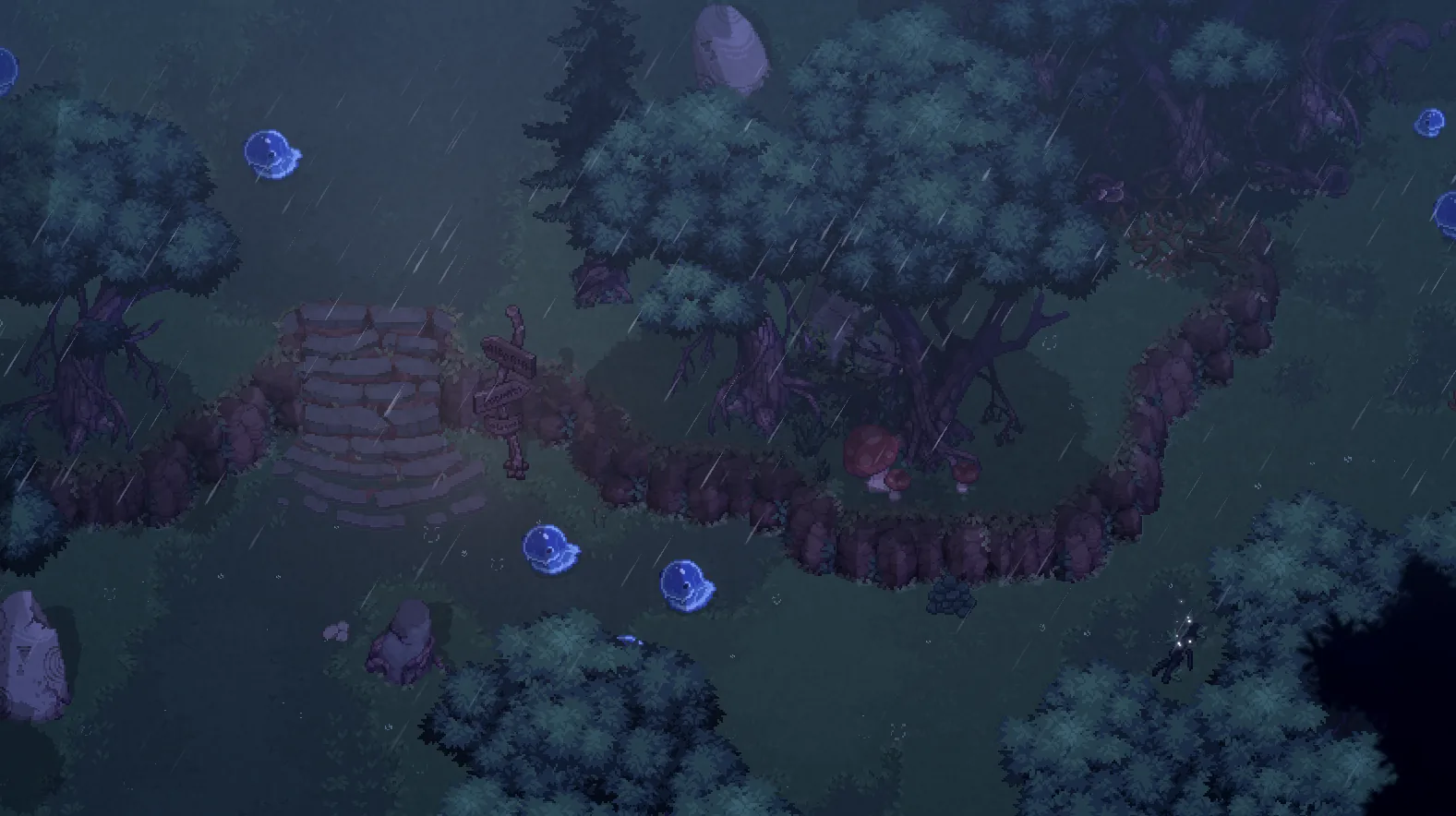
Dimraeth Character Creation: Master Your Build & Archetypes
Ready to conquer Mirkea? Discover the ultimate Dimraeth character creation guide, covering race-class synergies, stat scaling, and essential build tips.
Published:
Video Guide
FIRST Character in Dimraeth? Start Here!Table of Contents
Stepping into the pixelated world of Mirkea can feel overwhelming, but your journey begins long before you strike your first enemy. Mastering dimraeth character creation is the single most important step in ensuring you don’t spend your hard-earned gold on endless, frustrating respecs. Whether you are a solo adventurer or part of an eight-player co-op squad, understanding the foundational systems of this game is the key to turning your hero into a legend.
In this guide, we dive deep into the mechanics of dimraeth character creation, explaining how race, class, and personas intertwine to form your unique combat identity. From selecting the right archetype to optimizing your attribute points for maximum power, we will ensure your first hours in the game are smooth, efficient, and—most importantly—fun.
Defining Your Archetype: The Intersection of Race and Class
At the heart of the game lies the archetype system. Your race is not just a cosmetic choice; it dictates your base kit, weapon proficiency, and how you interact with the environment. When you engage in dimraeth character creation, you are effectively choosing your starting trajectory.
Every race-class combination acts as an "anchor." For instance, a Minotaur will always be a frontline force, while an Elf thrives on agility and speed. Your choice here defines which skill tree you access, setting the baseline for your combat loop.
Race
Core Identity
Primary Focus
Minotaur
Frontline Tank
Strength, Blunt Damage
Human
Versatile Hybrid
Adaptability, Bow/Blade
Elf
High Mobility
Precision, Twin Daggers
As noted by community players, weapons are race-locked. If your heart is set on using a battle-axe, you must choose a Minotaur; if you prefer the versatility of a bow and blade, the Human is your best path forward. Always verify these locked-in preferences before finalizing your choice.
The Science of Stats: Attribute Scaling Explained
One of the most complex layers of dimraeth character creation is the attribute system. When you visit a trainer to spend experience points (XP), you are not just leveling up—you are determining the efficiency of your build. The cost to increase an attribute is directly influenced by your race-class combination.
Why Attribute Efficiency Matters
If you try to push a "non-primary" stat on your character, it will cost significantly more XP. For example, a Fairy Magician attempting to focus heavily on Strength will find themselves falling behind in total points compared to a Minotaur Brawler.
Plan Your Build Early
Don't chase every stat. Focus on your archetype's "primary" attribute to maximize your value per point. Use the in-game Codex to check for specific attribute requirements on spells you intend to master later.
According to veteran testers, managing these "breakpoints" is how you prepare for late-game spells. By carefully distributing points, you can create hybrid builds that surprise even seasoned players. If you ever feel stuck, remember that re-speccing is possible, but it requires resources, so careful planning is still your best ally.
Navigating the Skill Tree: North, South, East, and West
The skill tree in Dimraeth looks daunting at first, but it is remarkably logical once you break it down by cardinal direction. Each axis represents a specific facet of your character's combat potential.
North/South (Racial Skills): These sections typically cover your physical prowess or unique racial abilities, such as bow mastery or heavy charge attacks.
East/West (Class Skills): These are focused on your chosen profession, granting access to crowd control, magical buffs, or specific weapon arts.
Example: The Skill Progression Path
Direction
Focus Type
Best Use Case
North
Melee Mastery
Best for high-damage strike/pierce builds
South
Ranged/Utility
Ideal for archers or hybrid spellcasters
East/West
Archetype CC
Perfect for stunning foes or managing debuffs
Many players report that the "corners" of the skill tree—unique intersections like the Echo Shade or Temporal Rot—are where the most powerful synergies hide. You should aim to map your path toward these special nodes as you level up.
The Persona System: Roleplaying Your Way to Power
While combat is vital, the Persona system adds a unique flavor to your dialogue and roleplaying experience. By choosing between Hero, Stoic, Scholar, or Joker, you influence how NPCs respond to you.
Hero: Principles and sacrifice.
Stoic: Blunt, direct clarity.
Scholar: Analytical and probing.
Joker: Irreverence and humor.
Community reports indicate that while your choice isn't permanent, it dictates the types of dialogue options that appear most frequently. This is an excellent way to lean into your character’s narrative without being forced into a rigid playstyle.
Essential Gear Tips and Farming Strategy
Gear is the final piece of the dimraeth character creation puzzle. Loot drops in tiers with randomized prefixes, which modify your stats.
Prefixes dictate base stats: A "Hasty" item will always prioritize spell haste, regardless of the random rolls that follow as you upgrade.
Salvage, don't hoard: Early game loot is plentiful. Break down items you don't need to gather materials for upgrading your primary gear set.
Upgrade early: Getting your gear to +2 is often enough to unlock the first bonus stat, giving you a massive boost in the early game.
Don't Forget the Training Dummy
Once you reach the Sanctum, craft a training dummy immediately. It is the best way to test your gear synergies without the pressure of live combat.
By utilizing the bounty system, you can farm bosses for specific set pieces. As you complete higher-tier bounties, the quality of your drops improves, allowing you to fine-tune your character's power level.
Frequently Asked Questions (FAQ)
Can I change my race or class after starting the game?
No, the race and class choices made during dimraeth character creation are permanent. However, you can use an Elixir of Rebirth to respec your stats if you feel your build isn't performing as expected.
Do stats drop when I die?
Unlike many "Souls-like" games, your experience points do not drop upon death in Dimraeth. This makes the game much more forgiving, allowing you to experiment with different playstyles without the constant fear of losing progress.
How do I unlock new skills?
You unlock skills by finding spell books out in the world. Once found, you can craft them at your trainers—Raina for melee, Tamson or Miral for magic. Always check your map for points of interest where these books are hidden.
Is multiplayer scaling a thing in Dimraeth?
Yes, the game is designed for 1-8 players. When building your character, consider how your archetype synergies (like a "Burning" engine) will interact with your teammates' builds to maximize party damage.